

Hatshepsut Temple in Luxor
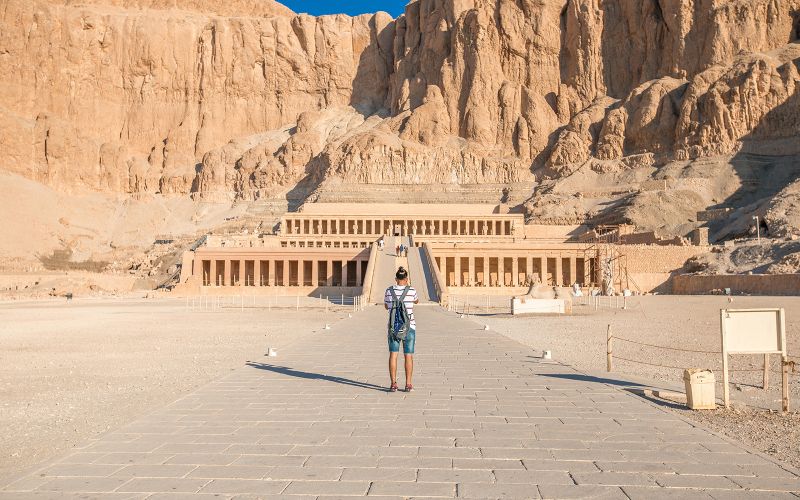
Egypt is filled with amazing Site and historical monuments, courtesy of Egypts over 3,000-year-old ancient Egyptian civilization. One of that aforementioned monuments is the mortuary temple of Hatshepsut. Located. Built for the Eighteenth Dynasty pharaoh, queen Hatshepsut and in dedication to the Deity, Amun. Naturally whom she considered her true father however as it is for anything from the age of the pharaohs, filled with ambiguity and mysteries to Discover. Which is exactly what we will be doing today as we discover When and where the temple was built and the structure of the Hatshepsut Temple, a true masterpiece of the pharaonic era.
-
Where is the temple of Hatshepsut?
-
When was it Built?
-
The structure of the Hatshepsut temple
-
Accessibility and Ticket prices
Where is Hatshepsut temple?
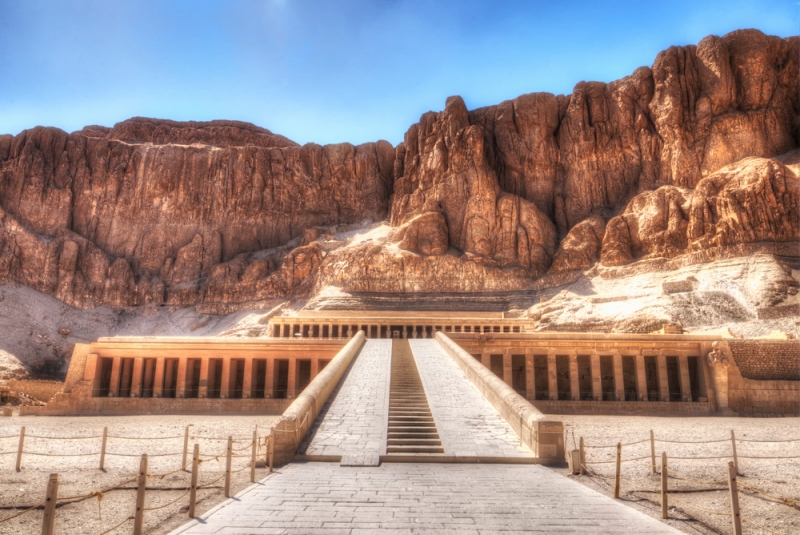
Naturally, the first question that comes to mind is where exactly is the temple of Hatshepsut. The queen Hatshepsut temple is located in upper Egyp, more accurately the Beautiful city of Luxor. Located beneath the cliffs of al Deir el Bahari on the west bank of the Nile near the valley of the kings and located next to the equally important mortuary temple of Mentuhotep II,
Tailor-make your trip to Hatshepsut temple & Luxor here
When was it built?
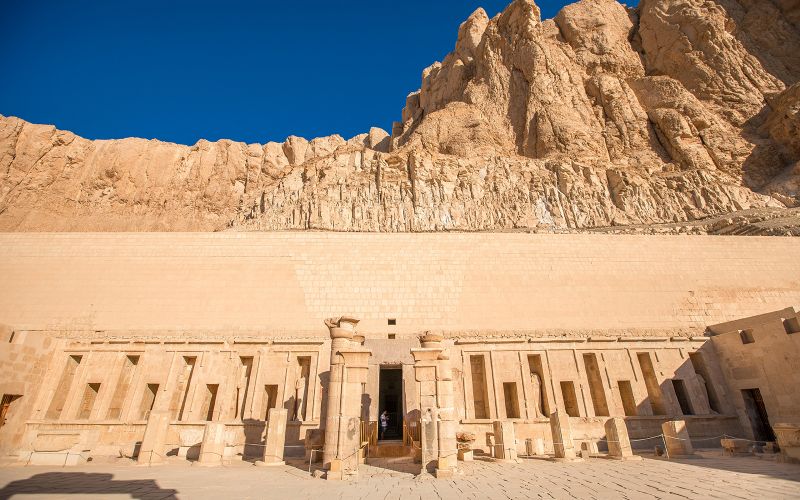
It is believed that the mortuary temple of Hatshepsut in the time of the eighteenth dynasty more specifically in the ruling time of the female Pharoah Hatshepsut. The Reign of Queen Hatshepsut is as magnificent as the temple itself, daughter of Thutmose one and coming to power due to the young age of her half brother, Thutmose III and was named as regent until Thutmose reached the adequate age to Rule. Nonetheless, her reign was one of the most prosperous and peaceful eras in Egypt,
The Hatshepsut temple was commissioned by the reigning queen herself to serve as an Artistic representation of the queen’s life and reign and a beacon of elegance and grandeur. Designed by the queen’s steward and confidant and rumoured lover had modelled the mortuary temple of Hatshepsut on the same lines as its close brethren, the temple of Mentuhoteb II but amplified everything of its aspects. The queen Hatshepsut temple did not only serve as a mark or landmark of her peaceful and prosperous reign but it was a place of worship for her God Horus, the falcon-headed deity and would serve as her mortuary temple when the afterlife beaconed for her.
The mortuary temple of Hatshepsut is believed to have been commissioned by the queen herself soon after her ascension to power in 1479 BCE. Designed by her closest confidant and Steward Senemut, It mirrored the Layout and Design of the temple of MentuhotebII II but with all what made the aforementioned great amplified and maxed Out while keeping in line with the traditional approach of Symbolism and symmetry that dominated all forms of ancient Egyptian architecture and art.
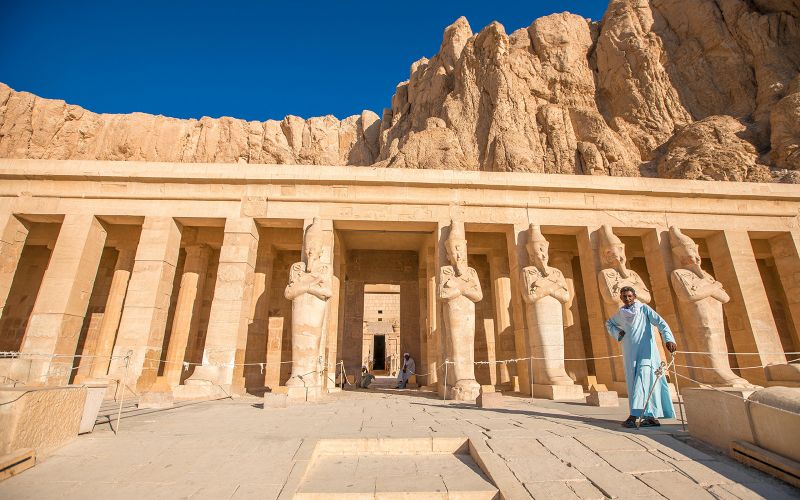
Embed in the lower section of the cliff towering it , The main subsections of the temple are formed of a Large central Ramp leading you from the Grond level of the temple to the second floor of this three-story temple complex, two smaller side ramps on the first-floor leading also up to the second, The Ground Level courtyard, and last but not least a third courtyard and a third ramp leading you from the second to the third and Final Floor. The temple is riddled with signs of architectural Luxury and elegance from the statues of the Lions flanking the entrance of the Second floor to the beautiful reflecting pools and many elaborately carved colonnades, statues and inscriptions telling the stories of this great female figure and ruler of Egyp, An example of such stories is the one inscribed on the birth colonnade and how her true father is Amun describing the night the Deity descended to mate with her mother amongst other such tales. The Queen Hatshepsut temple is simply a piece of Egyptian architectural art which words can do no justice
Accessibility and Ticket prices:
The queen Hatshepsut temple is fully accessible and open to both locals and Tourists from 9 AM to 5 PM Egyptian time. The entrance fee for the temple is 10$ with a small room for a variance if any
In conclusion, Although the Reign of Hatshepsut was that of prosperity and peaceful coexistence it was not free of strife for the Female queen of Egypt. Although it is believed that the battle of Megiddo in which the Egyptians were victorious was prepared and foresought by Hatshepsut herself and through Giving Thutmose III supreme control of the army, possibly providing Egypt with one of its greatest military leaders in history her deeds were not met by kindness. As soon as Thutmose III was of the right age to rule he actively started to remove Hatshepsut’s name from all historic record and eliminated her ruling period through backdating his own to the date of her father’s death.
Today the Mortuary temple of Hatshepsut remains as a reminder of the Rule of the female Pharoah, tribute to Amun and last but not least a model of elegance, beauty, architectural uniqueness and a classic masterpiece in the extensive collage of Egypt’s historic landmarks and monuments
Explore the Marvels of Hatshepsut temple with our vast selection of Egypt Tours
-
Travel Experience Since 1955
Memphis Tours is one of the pioneers which have great impact on travel industry for more than 55 years of experience.
-
Personalized Travel Services
Whatever your travel dreams, together we can custom-design the perfect itinerary with highly personalized services just for you
-
We Speak Your Language
A multilingual website offers content in 6 different languages English, Spanish, Portuguese, French, Italian and German
-
Flexibility to Change
We know how important it is for travellers to have the flexibility to change their itinerary due to some reasons or force majeure
-
Your Safety and Security
A professional will accompany the guests to all of the places; they will never be left alone to fend for themselves
-
High Quality Service
We do believe honestly that quality should come first and quantity would come later and our main objective focused on (Quality is our Top Priority)
-
Customer Service 24/7
We offer Customer Support 24 hours a day, 7 days a week by phone and email for questions about our tours and services
-
Support Sustainable Tourism
We are attempting to make a low impact on the environment and local culture, while helping to generate future employment for local people
-
Secure Online Payment
Our website is protected by the world′s most secure online payment system VeriSign Secure
-
Secure Website by MacAfee
Memphis Tours website is a McAfee Secure site that helps keep you safe from identity theft, credit card fraud and spyware